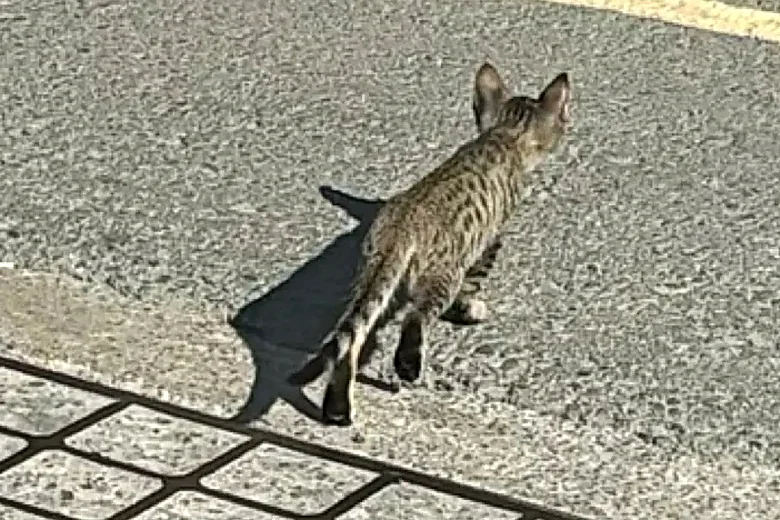
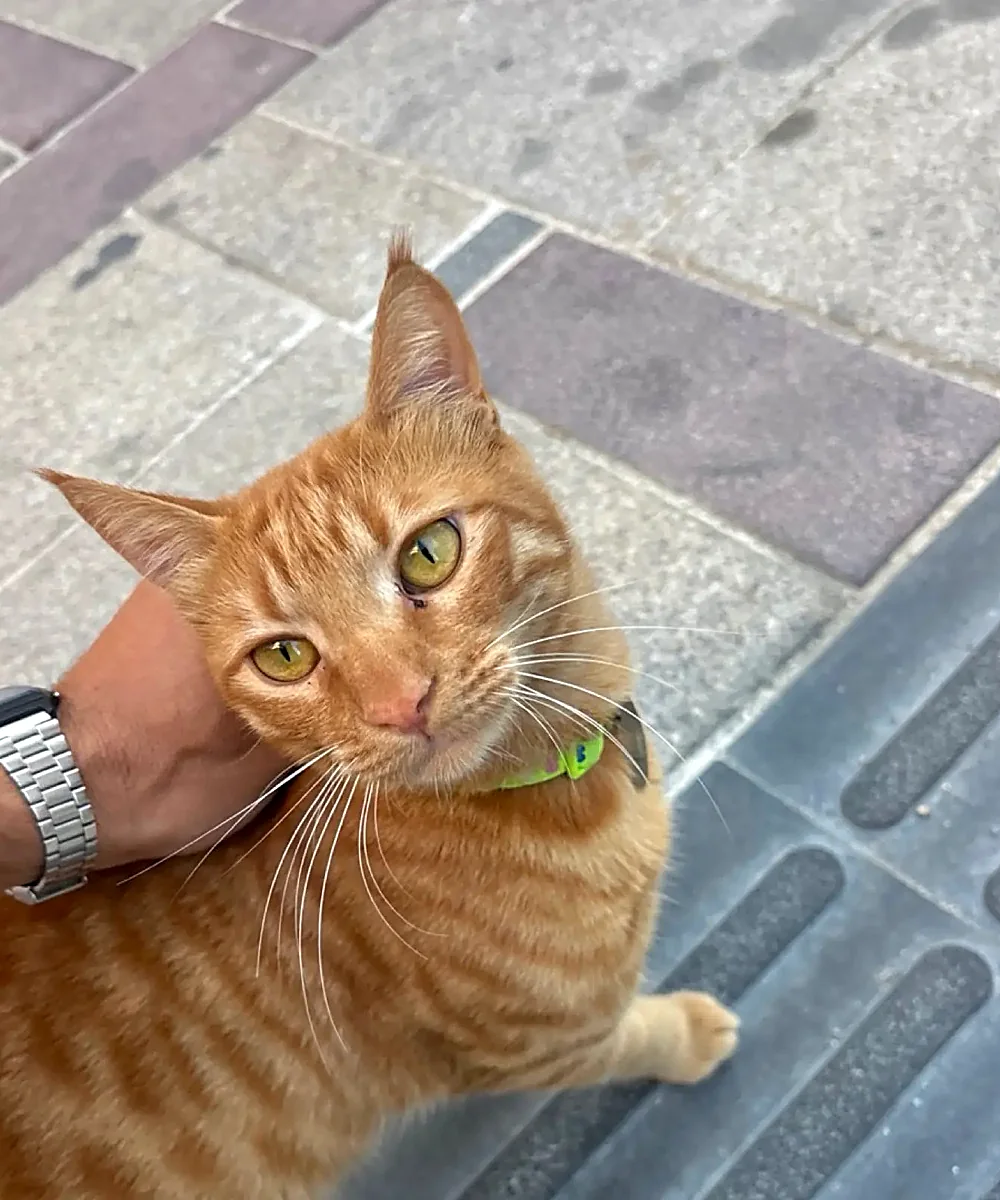
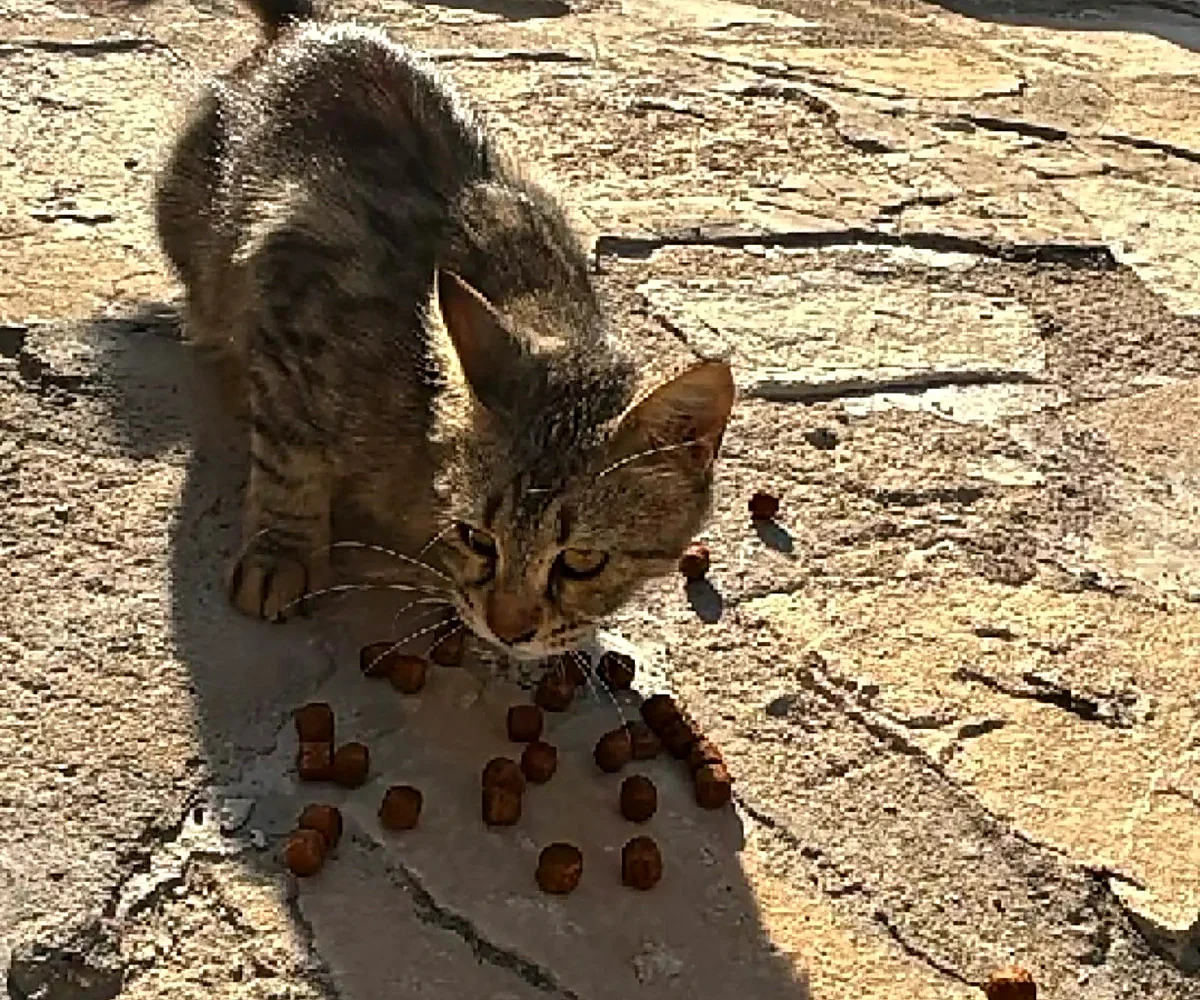
Most people greet a cat the way they’d greet a dog: walk straight up, look it in the eye, reach a hand out over its head. To a cat, that’s a large animal staring and looming. It runs.
Cats who live outside have good reason to be careful. The trick is to do the opposite of everything that looks like a threat, and to let the cat make the first move.
The short version
- Stop a few metres away and crouch down.
- Don’t stare. Look a little to one side.
- Slow blink, and wait.
- Hold out one finger at nose height, and let it sniff.
- If it rubs, stroke its cheek. If it leaves, let it go.
Read the cat first
International Cat Care’s guide to cat communication explains the signals. The main ones:
- Tail straight up. Friendly. This cat is saying hello.
- Ears up, whiskers relaxed, eyes soft. Calm. Worth a try.
- Ears flat or turned sideways, big pupils. Scared. Back off.
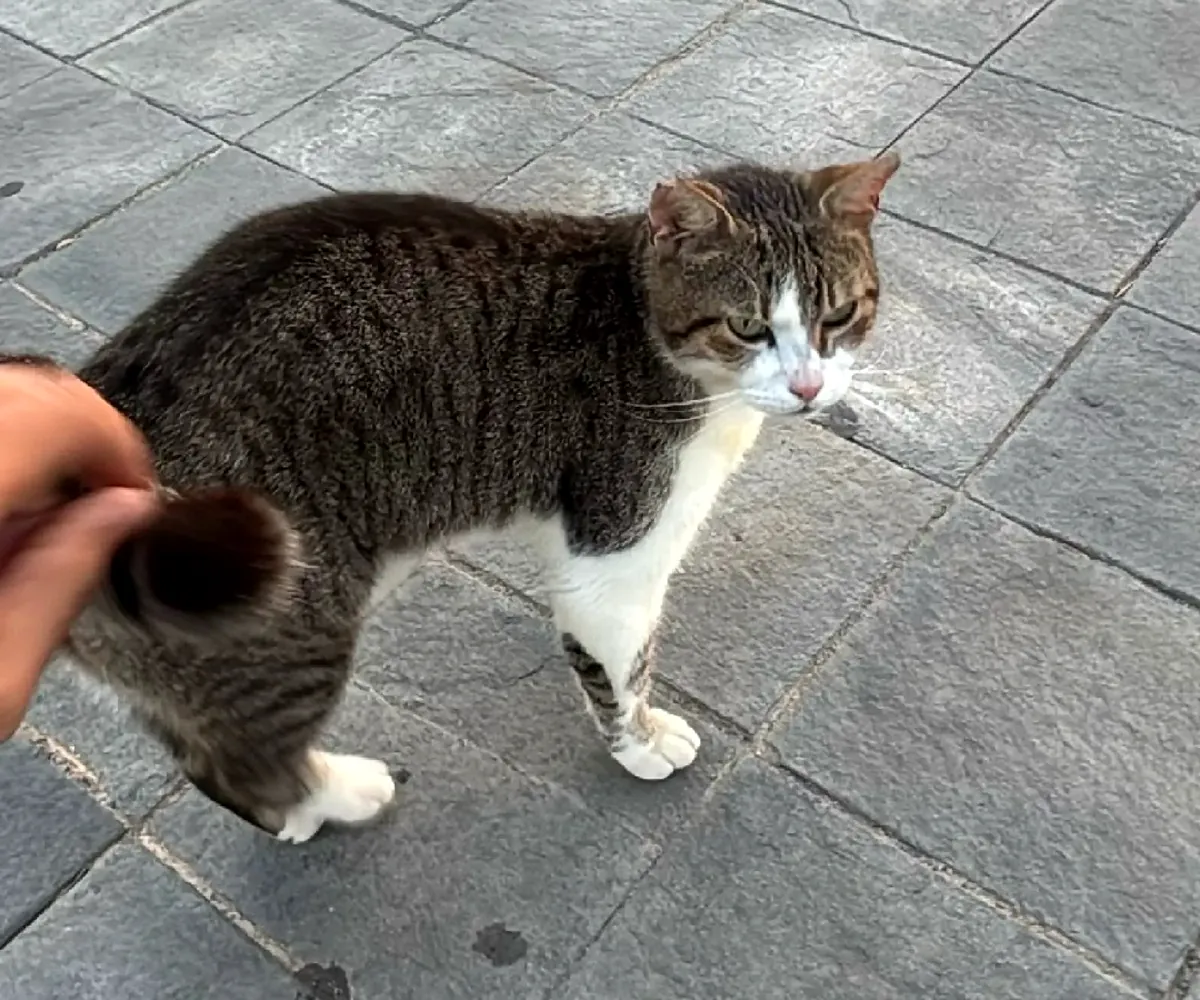
- Crouched low, tail wrapped tight, body tense. Anxious. Give it space.
- Fur on end, hissing, tail fluffed up. Leave it alone.
The slow blink
To a cat, a stare is a challenge. Closing your eyes says the opposite: I’m not a threat. In 2020, researchers at the Universities of Sussex and Portsmouth tested it on 45 cats. Cats blinked back at owners who slow blinked at them. They did the same with strangers, and were more likely to walk up to a stranger who had slow blinked at them than to one who just looked at them.
Here’s how, in the words of Professor Karen McComb, who led the study: narrow your eyes as you would in a relaxed smile, then close them for a couple of seconds. Then wait. A cat that blinks back is saying hello.
Getting closer
- Get low. Crouch or sit. You look smaller and slower.
- Sideways on. Turn your body a little, rather than facing it square.
- One finger. Hold it out at the cat’s nose height, and keep still. Sniffing it is how cats say hello to each other.
- Let it rub. If it pushes its cheek against your hand, it’s marking you as friendly. Stroke its cheeks, chin and the top of its head.
- Skip the belly. A cat rolling over is showing trust, not asking for a belly rub. Most will grab your hand if you try.
- Stop first. A few strokes, then stop. If its tail starts to swish or its skin twitches, it’s had enough.
Some cats just won’t
A cat born outside that has never been handled may never want to be touched, and that’s fine. It can still be neutered, fed and watched over from a few metres away. Don’t try to pick up a cat you don’t know. A scared cat bites and scratches hard, and a cat bite can get infected quickly. If you’re bitten, see a doctor.
Trying to get a photo? Our cat photo tips are built on the same idea: get low, be patient, let the cat do its thing.
Slow blink, snap, and add it to your collection. A cat on the map is a cat someone has seen.